
The spotlights & models presented below are effective practices, projects, or programs implemented by higher education institutions to engage with displaced students and non-students. These innovative models are the result of thoughtful partnerships across campuses and with a diversity of external partners. We collect and curate these models in the following library to inspire institutions that may want to replicate in their communities. Each model has a point of contact that you should feel free to contact. If you would like to submit a model, fill out the form here or reach out to Axelle at axelle@presidentsalliance.org.
Pathways of engagement
Pathway: Enroll Refugee Students
Educational Opportunities for Resettled Refugees

Arizona State University: Education for Humanity.
Summary: In collaboration with humanitarian partners, the Education for Humanity initiative at Arizona State University (ASU) creates and implements relevant and integrative education programs with refugee communities worldwide. Education for Humanity offers a blended learning model combining digital learning tools with in-person support through partner organizations. Since its establishment in 2017, Education for Humanity has impacted over 11,500 learners in 17 countries globally through its English language, college preparatory, and workforce readiness programs. Continue reading here.

Bard College: enrolling and supporting displaced students and scholars.
Summary: Bard’s program reflects the College’s long history of supporting displaced students and faculty. In August 2021 Bard pledged 100 scholarships to students at risk following the Taliban resurgence in Afghanistan. In 2022 Bard launched the Refuge Scholarship for students from Ukraine and Russia. These initiatives now comprise one program that provides tuition, room, board, and assistance with books, medical, legal, and other needs to 130 students this academic year. Continue reading here.

One Refugee: Supporting Students From Refugee Backgrounds.
Summary: One Refugee (1R) is a nonprofit organization based in Utah, that has made a positive impact on the lives of hundreds of college students from a refugee background. 1R provides students with academic mentoring, professional development, and financial assistance to help them access higher education opportunities in the U.S. Continue reading here.
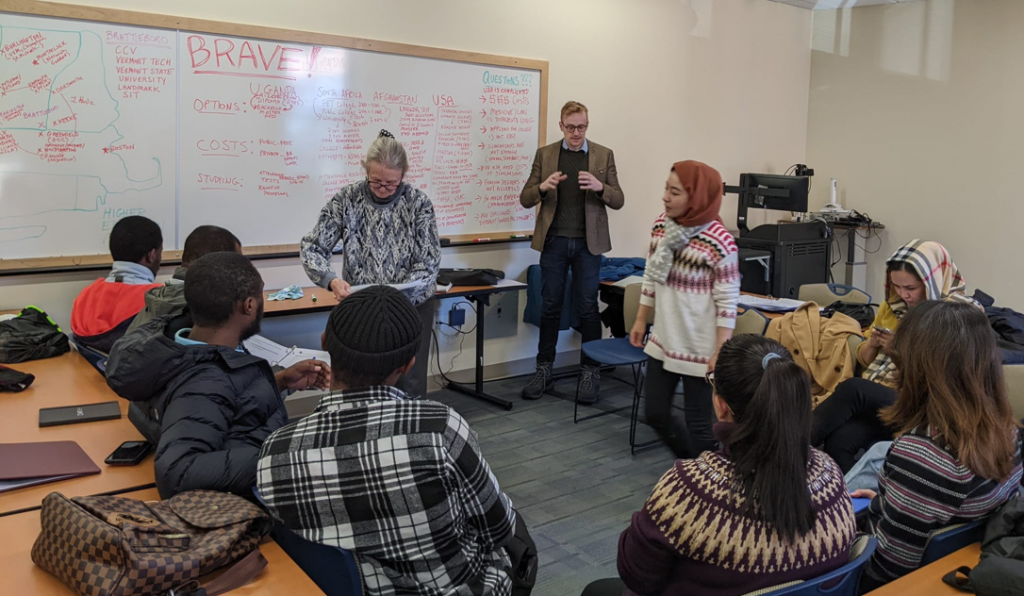
BRAVE: Building Refugee Achievement through Vermont Education
Summary: BRAVE (Building Refugee Achievement through Vermont Education) offers one-on-one, multilingual, and refugee-specific advising and orientation about the United States higher education system, local educational options, application procedures, and available support services. Continue reading here.

Wisconsin Refugee Technical and Higher Education Readiness (Pilot) Program
Summary: This readiness and college counseling pilot initiative has supported refugees and immigrants in pursuing higher education and technical degrees. The initiative has helped strengthen newcomers’ familiarity with the U.S. higher education system, navigate the process of enrolling in college and technical training courses, access financial aid, and understand various state and federal programs. Continue reading here.
English Language & Career Pathways

Summary: GPTC’s Adult Education Division provides High School Equivalency and English as a Second Language classes to the community, serving approximately 3,000 adult students annually. In addition, GPTC offers several career pathway options, tailored to immigrant and refugee students. The program was developed in response to a community need for more multilingual employees in early childhood care centers. Continue reading here.

Summary: The English Language Program at WashU’s School of Continuing & Professional Studies merges English language development with valuable workforce certifications. The program is specifically designed for refugees looking for career development. Continue reading here.

Everett Community College: I-BEST Career Pathways.
Summary: The I-BEST program primarily serves students who are pursuing or who have recently received their GED or high school diploma, or who are immigrants and refugees learning English. The program provides students with literacy education and workforce skills at the same time. It challenges the traditional notion that students must first complete all levels of basic education before they can begin workforce training or college-level classes. Continue reading here.

Highline College: The Puget Sound Welcome Back Center.
Summary: The Puget Sound Welcome Back Center at Highline College (PSWBC) is a program that aids educated professionals in recertifying to work in the United States. Individuals educated internationally receive help on the pathway to return to their chosen career in Washington State. PSWBC started in 2008, initially serving healthcare professionals, but in 2014 expanded its services to assist professionals in other fields. Continue reading here.

Lake Washington Institute of Technology: I-BEST/Guided Pathways.
Summary: Since its inception, I-BEST has been among the strongest programs on campus in terms of student outcomes. The program began with the offering of short workforce-oriented certificates, and students completed these programs at an impressive rate. At this time, Lake Washington Institute of Technology offers fourteen I-BEST certificate and degree programs housed in nine of its ten schools, with the first offering in the School of Design slated for development in 2021-22. Continue reading here.

Miami Dade College: Foreign-Trained Professionals Program.
Summary: The Miami Dade College Foreign-Trained Professionals (FTP) program is a one-stop-shop for individuals with foreign academic credentials seeking to continue their careers in the United States. As such, the program provides academic guidance and support services for credit and non-credit students seeking information regarding the credentialization of foreign degrees, licensing, and certification courses. Continue reading here.

Montgomery College: WorkPlus+ Program.
Summary: The Montgomery College WorkPlus+ program features entry-level English language courses that focus on the exploration of careers, the world of work, and core concepts in specific career sectors. As students enter the intermediate and advanced levels of English (per the U.S. Department of Education’s National Reporting System for Adult Education), a co-taught approach is used to deliver high-demand occupational area content along with adult ESOL/basic skills instruction, so that students may earn an entry-level, labor market-recognized credential along a career pathway. Continue reading here.

Pima Community College: Refugee Education Program.
Summary: The Refugee Education Program (REP) is a non-credit program within Pima Community College’s Adult Basic Education for College and Career (ABECC), which provides English Language Training (ELT) to adult students who hold refugee status. REP offers ELT classes at three levels: Adult Emergent Reader, Low Beginning, and High Beginning. The classes are held Monday through Thursday. Each class is two hours per day. Continue reading here.
Alternative Pathways (enrolling displaced students with F1 visas, TPS, etc)
The Duolingo University Access Program.
Summary: Created in partnership between Duolingo and the UNHCR, the Duolingo University Access (DUA) Program aims to create improved pathways to higher education for refugee students, by offering one-on-one guidance and assistance with the university and financial aid application processes, as well as immigration and visa processes. Continue reading here.

Syrian Youth Empowerment: A College Access Program for Displaced Students.
Summary: SYE Initiative, Inc. is a 501(c)(3) nonprofit that empowers youth in conflict zones by providing a path to higher education. Founded and led by Syrian refugees who experienced first-hand the challenges associated with continuing higher education both inside and outside of Syria, the SYE team is deeply aware of these challenges as well as the significant impact of higher education in allowing these students to realize their full potential. Continue reading here.
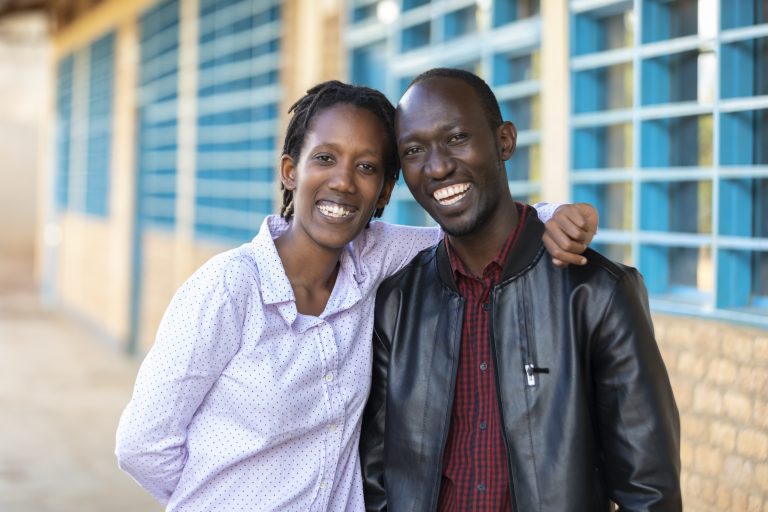
Kepler, SNHU and College Board: The Refugee College Guidance Counseling.
Summary: Navigating the college application and admissions process can be overwhelming for many students, but for international students who have experienced displacement or are refugees the process can seem almost impossible. However, there are organizations working to support students in the process and address these challenges through specialized refugee college guidance counseling. Continue reading here.
Pathway: House Refugees on Campus

School for International Training (SIT) and World Learning’s New Vermonter Education Program.
Summary: Through a whole of organization effort, World Learning and the School for International Training’s New Vermonter Education Program (NVEP) provides temporary housing, English language, and cultural orientation programming for refugees in southern Vermont in partnership with the Ethiopian Community Development Council, Brattleboro Development Credit Corporation, and the Tutorial Center in Bennington, Vermont. NVEP has supported hundreds of refugees from Afghanistan, the Central African Republic, Ethiopia, Eritrea, Guatemala, Ukraine, and Yemen. Continue reading here.

Summary: Since 2021, the University of Tulsa (TU) has housed refugee individuals on campus in unused student apartments. This housing program was developed in partnership with local resettlement agencies to address housing needs in the City of Tulsa. To date, TU has housed 38 non-student refugees on campus. Continue reading here.
Pathway: Service Learning and Volunteer Engagement

Georgetown University Health Navigators.
Summary: The Refugee Health Navigator Program was developed to address common barriers to health care and to increase health systems comprehension for refugees. Students from different programs at Georgetown University are paired together and matched to a newly arrived family working with a resettlement agency. The program is intended to help remove the barriers to health care by identifying critical resources for newcomers, helping them navigate through health care services and systems, and promoting newcomer health. Continue reading here.

Kansas City University Student Health Advocates Program
The Student Health Advocates program at KCU, engages students in community-based, non-clinical roles to promote shared health objectives alongside partnering organizations. Through the Refugee Health Navigator Program, a partnership with Della Lamb Community Services, students support newly resettled refugees by helping them access healthcare services and understand how to navigate the U.S. healthcare system.
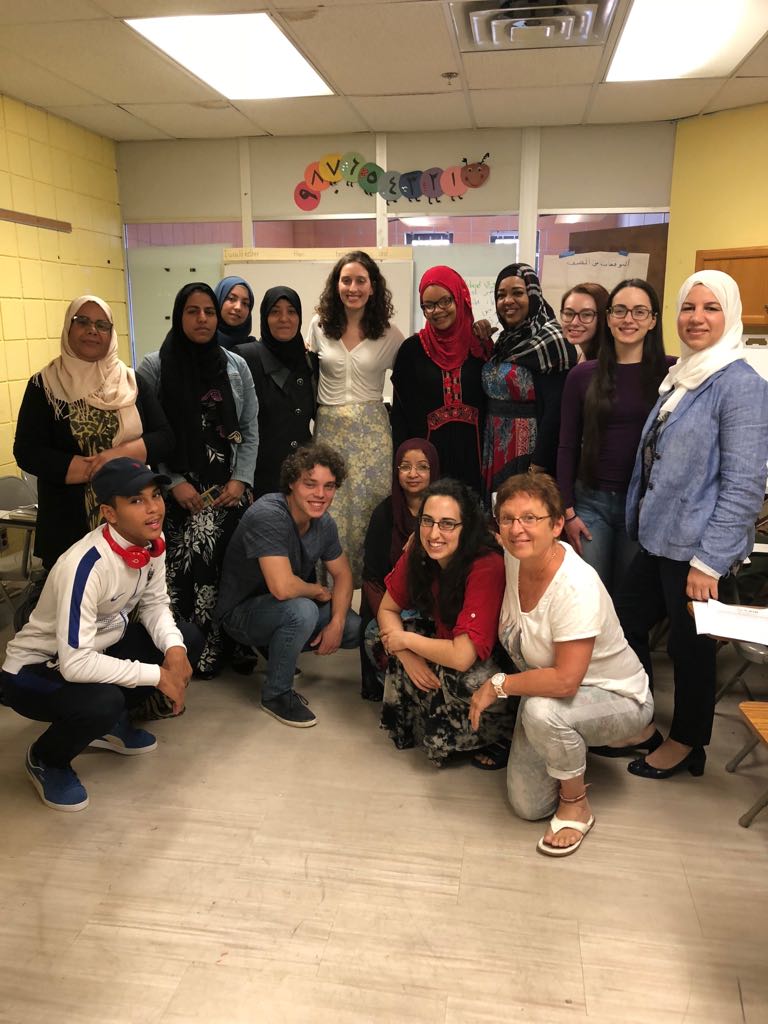
Middlebury College Center for Community Engagement: Jiran.
Summary: This intensive summer language program pairs intermediate and advanced language students with underserved newcomer families who speak their target language. “Jiran” means “neighbors” in Arabic, and the goals of the program are twofold. Jiran helps university-level language students improve their linguistic and intercultural competence while learning about US immigration and refugee resettlement. Secondly, Jiran helps bridge resource gaps and supports recently arrived families as they build connections in their new communities. Jiran has historically been an Arabic language program but is now exploring expanding the model to more languages. Continue reading here.

University of Denver Ready for American Hospitality (RAH)
Summary: The RAH program is a collaboration between the Ethiopian Community Development Council (ECDC) African Community Center (ACC) and the University of Denver’s (DU) Fritz Knoebel School of Hospitality Management, which serves as a service-learning program for refugee, asylee, and migrant populations alongside their undergraduate counterparts of the Human Capital course, engaging in cultural exchange and Hospitality training that equips the students to be stronger candidates for the US hospitality workforce, and aiding the refugee population in retaining meaningful employment. Continue reading here.

WSU Health Navigator Program: pairing nurses and newcomers.
Summary: Washington State University College of Nursing students in Spokane, WA, in collaboration with IRC-Spokane staff, serve as health system navigators by assisting with medical and dental appointments and providing training on insurance and health access issues for newly arrived refugee families. Continue reading here.

Summary: The service-learning course developed at the University of Tulsa involves students in the refugee resettlement process through participation in the University’s Every Campus A Refuge (ECAR) chapter. Through a trauma-informed approach, students work with an ECAR family on campus and engage in other service-learning tasks with local refugee resettlement. Continue reading here.
Summary: This curriculum equips universities and colleges to become receiving communities for refugees and other immigrants seeking safety in the U.S. due to war, violence, and persecution. Students and university communities work alongside professional resettlement staff to gain firsthand experience in the complexities of the resettlement process by providing essential humanitarian assistance for newly arriving families and individuals forcibly displaced. Continue reading here.

Summary: The Intercultural Cafe is a welcoming and inclusive environment designed for those wishing to practice their English conversation skills. Learners are invited to the Cafe to enjoy tea and refreshments, meet college students, and practice conversation skills. Learners prepare for the American citizenship exam and practice English grammar, reading, writing, and basics. Continue reading here.